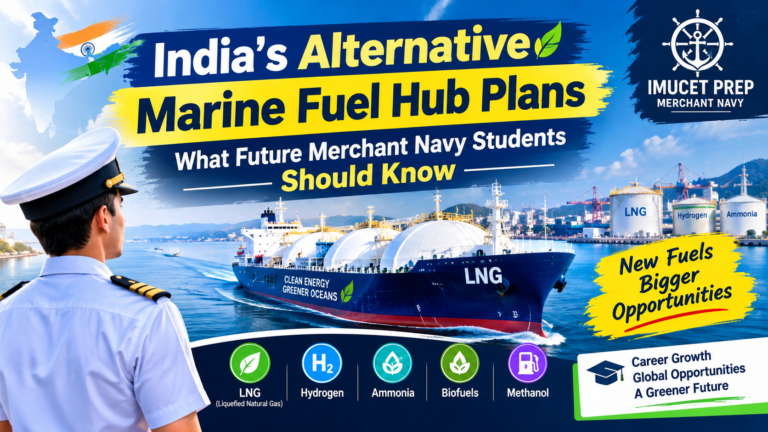
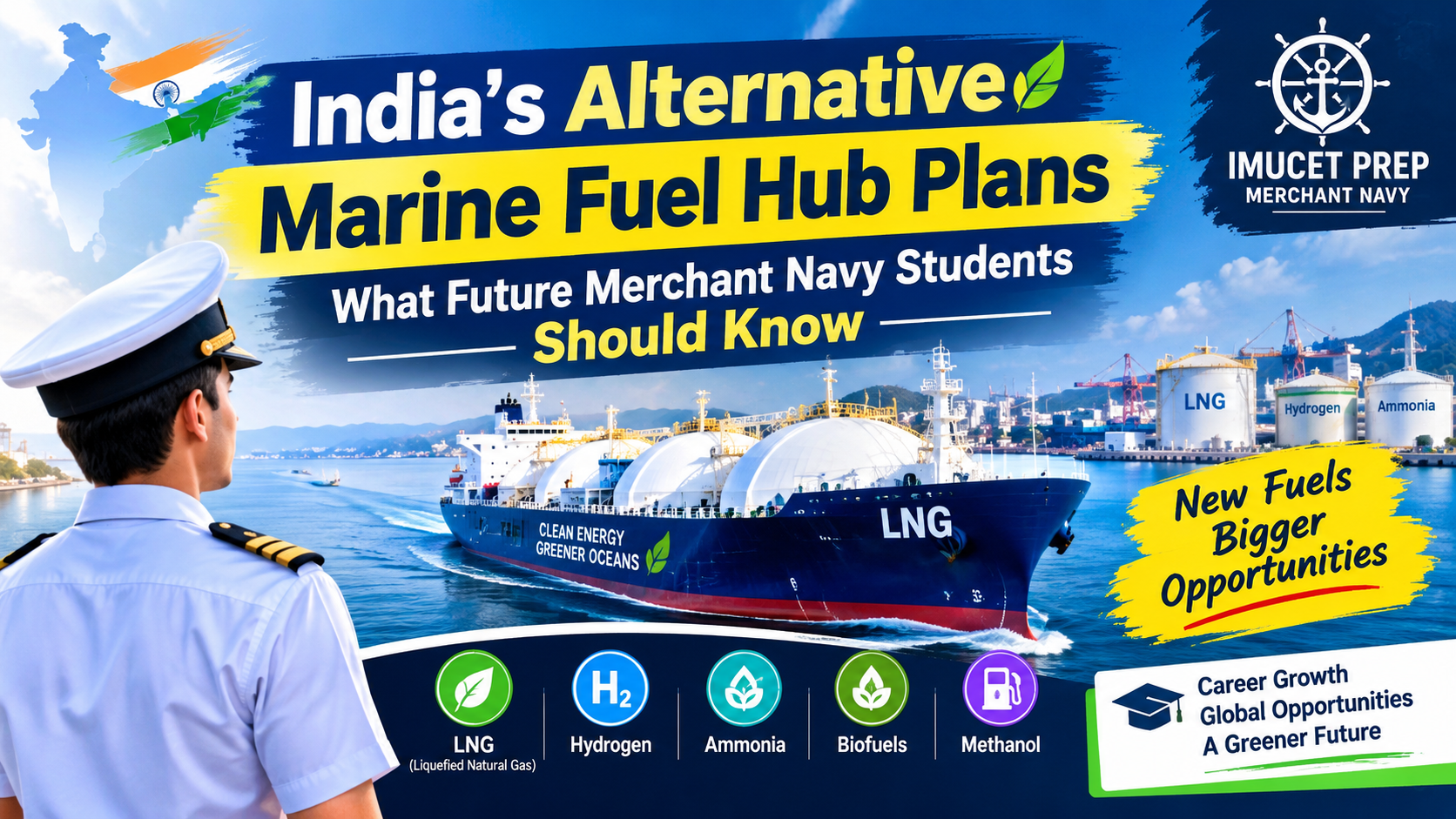
India's Alternative Marine Fuel Hub Plans: What Future Merchant Navy Students Should Know
India’s maritime sector stands at a transformative crossroads. With global shipping regulations tightening and environmental concerns intensifying, India’s alternative marine fuel hub plans represent a pivotal shift in how future merchant navy professionals will operate vessels. For IMU CET aspirants preparing for careers in India’s merchant navy, understanding these emerging fuel technologies isn’t just academic—it’s becoming essential for employment readiness.
India’s alternative marine fuel hub plans align with the International Maritime Organization (IMO) 2030 and 2050 strategies, positioning the nation as a crucial player in sustainable shipping. These plans directly impact merchant navy students’ career trajectories, skill requirements, and the future maritime workforce. The shipping industry’s transformation toward cleaner fuels creates unprecedented opportunities for those pursuing IMU CET preparation with forward-thinking education.
Why the Shipping Industry Is Moving Towards Alternative Fuels
The global shipping industry, responsible for approximately 90% of world trade, contributes significantly to carbon emissions. Maritime transport generates around 940 million tonnes of CO2 annually—about 2.7% of global emissions. This reality has forced regulators, shipowners, and maritime organizations to reimagine fuel strategies.
International conventions like MARPOL Annex VI and the IMO 2030/2050 strategies mandate substantial emission reductions. For merchant navy professionals, this transition means:
- Regulatory Compliance Requirements: New fuel systems require specialized knowledge
- Career Advancement: Officers skilled in alternative fuels command premium positions
- Job Security: Green shipping expertise ensures long-term employability
- Innovation Opportunities: Emerging technologies create new maritime career pathways
India’s alternative marine fuel hub plans directly respond to these global pressures, making it crucial for merchant navy students to understand why this transition matters professionally.
Key Alternative Marine Fuels: Green Methanol, Ammonia, Hydrogen and Biofuels
Understanding India’s alternative marine fuel hub plans requires familiarity with the primary fuel alternatives reshaping maritime operations:
Green Methanol
Produced from biomass or captured CO2, green methanol offers a nearly carbon-neutral fuel option. It integrates relatively easily into existing marine engines, making it attractive for maritime operators transitioning from conventional fuels. IMU CET aspirants should note that green methanol handling requires specific safety protocols and engine modifications.
Ammonia
Ammonia contains no carbon and produces zero CO2 when burned. However, it presents handling challenges, including toxicity concerns and corrosion risks. Future merchant navy professionals will need extensive training in ammonia cargo handling and engine technology adaptations.
Hydrogen
As the cleanest alternative fuel, hydrogen produces only water as a byproduct. Fuel cell technology enables hydrogen utilization, though storage and infrastructure challenges currently limit widespread maritime adoption. India’s alternative marine fuel hub plans increasingly emphasize hydrogen research and pilot projects.
Biofuels
Sustainably sourced marine biofuels reduce lifecycle carbon emissions by 50-80% compared to conventional fuel oil. Biofuels require minimal engine modifications, making them an interim solution during the broader maritime transition.
India's Role in Developing Green Shipping Infrastructure
India’s strategic position in global maritime trade positions it as essential in developing green shipping infrastructure. The nation handles approximately 95% of its trade by sea, making India’s alternative marine fuel hub plans economically significant.
Key Government Initiatives:
- National Maritime Agenda: Emphasizes sustainable shipping and green technology adoption
- Port Infrastructure Development: Major ports upgrading facilities for alternative fuel supply
- Research Institutions: IITM and maritime universities advancing fuel technology research
- Industry Partnerships: Collaborations with global shipping companies for pilot programs
For merchant navy students, these developments signal that employers increasingly demand knowledge of sustainable maritime practices. Comprehensive IMU CET preparation programs now include modules on green shipping technologies, reflecting industry expectations.
Major Ports and Green Hydrogen Initiatives in India
India’s alternative marine fuel hub plans focus on developing critical port infrastructure:
| Major Port | Green Hydrogen Initiative | Expected Launch | Fuel Capacity (Tonnes/Year) |
|---|---|---|---|
| Paradip Port (Odisha) | Green Hydrogen Hub | 2025 | 50,000+ |
| Mumbai Port Trust | Alternative Fuel Terminal | 2024 | 75,000+ |
| Cochin Shipyard | Ammonia Fuel Pilot | 2025 | 30,000+ |
| Jawaharlal Nehru Port (JNPT) | Multi-Fuel Infrastructure | 2025 | 100,000+ |
| Kandla Port | Green Methanol Terminal | 2024 | 40,000+ |
These initiatives directly create opportunities for merchant navy professionals specializing in alternative fuel operations. Understanding port-specific infrastructure helps IMU CET aspirants identify career opportunities aligned with emerging maritime hubs.
How Alternative Fuels Could Change Merchant Navy Careers
India’s alternative marine fuel hub plans will fundamentally reshape merchant navy career structures:
Engineering Officers: Traditional marine engineers will transition into “Green Marine Engineers,” requiring expertise in fuel cell technology, ammonia handling systems, and hydrogen storage mechanisms. These specialized roles command higher salaries and faster career progression.
Deck Officers: Enhanced responsibilities include monitoring alternative fuel systems, managing new cargo classification standards, and ensuring compliance with evolving environmental regulations. Officers managing green fuel vessels often receive supplementary compensation and priority promotions.
Safety and Environmental Officers: A new career category is emerging specifically for maritime safety related to alternative fuels. Organizations increasingly hire officers dedicated to green fuel compliance and environmental management.
Research and Development: As India’s alternative marine fuel hub plans expand, maritime companies seek innovation-focused professionals for fuel optimization and technology evaluation.
New Skills Future Merchant Navy Cadets Should Develop
To remain competitive in India’s emerging maritime landscape, merchant navy students should prioritize developing:
- Alternative Fuel System Knowledge: Understanding methanol, ammonia, hydrogen, and biofuel technologies
- Environmental Compliance: Mastery of IMO regulations and international environmental standards
- Advanced Engineering: Fuel cell systems, engine modifications, and propulsion technology
- Data Analysis: Monitoring fuel efficiency and optimizing consumption patterns
- Leadership in Sustainability: Managing teams during technological transitions
- Risk Management: Handling hazardous materials and novel operational challenges
Specialized IMU CET preparation courses increasingly incorporate these competencies, preparing cadets for the merchant navy roles of tomorrow.
Training Requirements for Handling Alternative Marine Fuels
India’s alternative marine fuel hub plans necessitate formalized training frameworks:
Formal Certification Programs:
- International Maritime Organization Advanced Fuel Training Certificates
- Advanced Certificate in Alternative Fuel Technology (offered by Indian maritime academies)
- Hazmat Handling for Ammonia and Hydrogen Systems
- Green Methanol Operations and Safety Protocols
On-Board Training: Merchant navy officers require supervised operational experience with alternative fuel systems before independent command responsibilities. Shipping companies prioritize hiring officers with documented alternative fuel training, making specialized education critical for career advancement.
Continuous Professional Development: As technologies evolve, maritime professionals must engage in regular upskilling. IMU CET aspirants should understand that alternative fuel expertise requires continuous learning throughout their careers.
Safety Challenges and Environmental Considerations
India’s alternative marine fuel hub plans must address significant safety and environmental challenges:
Safety Concerns:
- Ammonia toxicity requires enhanced ventilation systems and crew protection equipment
- Hydrogen’s high flammability demands advanced containment technologies
- New fuel handling procedures increase operational complexity
- Equipment failure risks in untested technologies require robust contingency planning
Environmental Considerations:
- Production methods must ensure genuine carbon reduction across entire fuel lifecycles
- Supply chain sustainability determines actual environmental benefits
- Water consumption in green hydrogen production requires management
- Land use impacts of biofuel cultivation need monitoring
Merchant navy students should comprehend these nuances, as employers increasingly assess environmental stewardship awareness during recruitment.
Career Opportunities in Green Shipping and Sustainable Maritime Operations
India’s alternative marine fuel hub plans create diverse employment pathways:
Immediate Opportunities (2024-2026):
- Hybrid fuel vessel operations
- Green port management roles
- Environmental compliance officers
- Alternative fuel system technicians
Medium-Term Opportunities (2027-2030):
- Pure hydrogen-powered vessel command
- Ammonia fuel conversion specialists
- Green shipping fleet managers
- Environmental auditing positions
Long-Term Opportunities (2031+):
- Advanced propulsion research roles
- Maritime sustainability consultants
- Green technology innovation leadership
- International regulatory advisory positions
For IMU CET aspirants, these opportunities underscore why alternative fuel knowledge provides competitive advantage in merchant navy careers.
How IMU CET Aspirants Can Prepare for the Future of Green Shipping
Strategic preparation for India’s alternative marine fuel hub plans involves:
Academic Preparation:
- Complete structured IMU CET courses incorporating green shipping modules
- Study international maritime environmental regulations
- Understand basic fuel chemistry and thermodynamics
- Learn propulsion system fundamentals
Practical Engagement:
- Participate in maritime internships with companies investing in green technology
- Seek vessel training aboard hybrid or LNG-powered ships
- Engage with maritime sustainability clubs and organizations
- Network with maritime professionals specializing in alternative fuels
Industry Awareness:
- Follow major shipping companies’ alternative fuel announcements
- Monitor Indian port development projects related to green fuels
- Subscribe to maritime industry publications covering sustainability
- Attend maritime conferences addressing environmental innovation
Continuous Learning:
- Enroll in specialized online courses on alternative fuel systems
- Obtain additional certifications beyond standard IMU CET requirements
- Stay updated with evolving IMO regulations and industry standards
- Develop comprehensive understanding of India’s alternative marine fuel hub plans
Conclusion
India’s alternative marine fuel hub plans represent far more than environmental policy—they embody the future of merchant navy careers. As global shipping transitions toward sustainable operations, merchant navy students who understand alternative fuel technologies, infrastructure requirements, and operational challenges position themselves advantageously for career advancement and job security.
IMU CET aspirants preparing for merchant navy roles should recognize that comprehensive understanding of India’s alternative marine fuel hub plans is no longer optional—it’s becoming fundamental professional knowledge. The shipping industry’s transformation creates unprecedented opportunities for educated professionals who grasp both traditional maritime operations and emerging green technologies.
By engaging seriously with alternative fuel knowledge, developing complementary technical skills, and maintaining awareness of India’s maritime infrastructure developments, IMU CET aspirants ensure they enter the merchant navy profession prepared for tomorrow’s challenges and opportunities. The future of maritime leadership belongs to professionals who understand and embrace sustainable shipping—and that future is now.
Frequently Asked Questions (FAQs)
Q1: What is IMU CET and why is it important for merchant navy careers?
A: IMU CET (Indian Maritime University Common Entrance Test) is India’s primary entrance examination for maritime education. It determines admission to premier maritime institutes offering degree programs in nautical science and marine engineering. For merchant navy careers, IMU CET qualification is virtually mandatory for officer-level positions.
Q2: How soon will alternative fuels dominate India's shipping industry?
A: According to India’s alternative marine fuel hub plans, hybrid and alternative fuel vessels will comprise approximately 30% of new constructions by 2030 and over 60% by 2040. Immediate job opportunities exist in transitional roles, with comprehensive industry shift expected within 10-15 years.
Q3: Do I need specific certifications to work with alternative fuel systems?
A: Yes. While basic knowledge is acquired through IMU CET preparation, specialized certifications in ammonia handling, hydrogen systems, or green methanol operations enhance employability significantly. Major shipping companies increasingly require these certifications for alternative fuel vessel assignments.
Q4: Are alternative fuel merchant navy positions better compensated than conventional roles?
A: Generally, yes. Officers managing alternative fuel systems command 15-25% higher compensation than conventional vessel counterparts, reflecting specialized skill value and operational complexity. This salary premium increases as industry transition accelerates.
Q5: Which Indian ports should I monitor for green shipping opportunities?
A: Paradip Port, JNPT, Cochin Shipyard, and Mumbai Port Trust are developing India’s alternative marine fuel hub plans most actively. These ports will generate significant employment opportunities for merchant navy professionals specializing in alternative fuel operations.