Is Lasik Allowed? Merchant Navy Medical Test Requirements & Eyesight Criteria
Passing the IMU CET written exam and clearing your sponsorship interview are massive achievements. But there is a final, non-negotiable gateway every single maritime aspirant must pass before setting foot on a ship: the strict Merchant Navy medical test requirements.
Unlike standard shore jobs, the maritime sector enforces rigid health criteria controlled by the Directorate General of Shipping (DG Shipping). Every year, brilliant students with top IMU CET ranks are disqualified simply because they didn’t verify their physical eligibility early on.
If you are currently preparing or evaluating the best merchant navy academy in Dehradun, here is the definitive breakdown of what happens during your official medical examination.
1. Eyesight Criteria: The Ultimate Dealbreaker
Eyesight rules trip up the majority of applicants, and the standards vary radically depending on whether you want to join the Nautical (Deck) department or the Engineering department.
| Department / Course | Visual Acuity (Each Eye) | Color Blindness Test |
| Deck Cadet / DNS / B.Sc Nautical | 6/6 vision unaided (No glasses allowed) | Must be absolutely flawless (Normal) |
| Marine Engineer / GME / B.Tech | Up to 6/12 unaided or 6/9 in both eyes | Must be absolutely flawless (Normal) |
If you are aiming for a deck career, you must possess perfect vision without corrective lenses. For engineering paths, a minor refractive error is permissible, provided it can be corrected to 6/6 with spectacles.
The Color Blindness Test
Color blindness is an absolute, permanent disqualification for both the deck and engine branches. Navigating a vessel requires identifying colored port (red) and starboard (green) navigation lights at night.
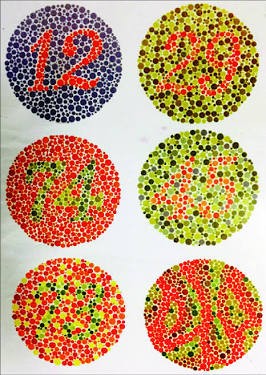
During your checkup, DG Shipping approved doctors will use an Ishihara chart booklet containing hidden numbers made of multi-colored dots to evaluate your color perception.
2. Is Lasik Surgery Allowed in the Merchant Navy?
This is the most frequent question asked by students arriving for coaching in Uttarakhand. The short answer is: Yes, but with strict conditions.
DG Shipping updated its medical examination rules to permit corrective laser eye surgeries (like Lasik, PRK, or SMILE), but you must meet the following baseline requirements:
Age Limit: The candidate must be at least 20 years old at the time of the medical exam (meaning you cannot use it to enter DNS right after class 12th if you are under 20).
Post-Op Window: The surgery must have been completed at least 6 months prior to the date of the medical examination.
Pre-Surgery Limits: Your original eye power before getting Lasik must not have exceeded severe limits (typically within minus 5 Diopters).
Fundus Certification: A certified ophthalmologist must confirm that your retina is completely healthy with no thinning or degenerative patches.
3. Comprehensive Breakdown of IMU CET Physical Fitness Checkups
Beyond your eyes, the official medical officer will run a full-body scan. The routine is highly clinical and ensures you can withstand a harsh maritime training environment at sea.
Hearing and ENT: You must be able to hear a whisper from a distance of 5 meters in a quiet room. Chronic ear discharge or an unhealed perforated eardrum will result in temporary or permanent rejection.
Skeletal and Physical Structure: You must have a normal gait with no major physical deformities, knock-knees, flat feet, or speech impediments (stammering is heavily scrutinized during panel interviews).
Pathology & Diagnostic Scans: Expect a complete panel of blood tests (checking for permanent conditions like Diabetes or Hepatitis B), a urine analysis, a chest X-ray, and an ECG to check cardiac health.
How to Prevent Last-Minute Rejection
Don’t leave your career to chance. If you are training at an IMU CET training institute, do not wait for the exam results to find out if your body can clear the entry rules.
Before you invest significant time and effort, book a private consultation with a certified DG Shipping doctor near you. They will perform a quick pre-screening of your vision and health markers against official protocols, giving you 100% peace of mind to focus completely on your preparation.
Frequently Asked Questions (FAQs)
Q1. What is the minimum height required to join the Merchant Navy?
For male candidates, the standard minimum height requirement is 157 cm. For female candidates, it is typically 145 cm.
Dehradun & Hilly Region Relaxation: Candidates belonging to Uttarakhand, Himachal Pradesh, and other designated hilly regions receive a standard 5 cm height relaxation, bringing the minimum requirement down to 152 cm for boys.
Q2. Can I join the Merchant Navy if I wear glasses?
Yes, but it depends entirely on your chosen department:
Deck Department (DNS / B.Sc Nautical Science): Your uncorrected, natural vision must be 6/6 in the better eye and 6/9 in the other eye. You cannot wear glasses while on duty.
Engine Department (B.Tech Marine Engineering / GME): Relaxed standards apply. Your uncorrected vision can be up to 6/12 in each eye (or 6/9 in the better eye and 6/18 in the other), provided it is 100% correctable to 6/6 using spectacles.
Q3. How strict are the weight and BMI limits during the medical exam?
The medical officer will calculate your Body Mass Index (BMI) using a standard weight-to-height calculator. The ideal acceptable range is strictly between 18.5 and 25. If you are slightly overweight (a BMI up to 29.9), the DG Shipping approved doctor may grant a temporary fitness clearance, provided you show no signs of underlying metabolic disorders like high blood pressure or sugar. Clinical obesity or being severely underweight will result in an immediate rejection.
Q4. What exactly is included in the full medical checkup?
The comprehensive DG Shipping medical test panel covers:
Vision & Color Blindness: Snellen chart tracking and Ishihara plate testing.
Audiometry (Hearing): Testing your ability to hear frequencies clearly down to 40dB in each ear individually.
Lab Diagnostics: Comprehensive blood work (CBC, Blood Sugar, HIV, Hepatitis B), along with a standard urine analysis.
Organ Scans: A standard chest X-ray to check lung health and an Electrocardiogram (ECG) to monitor cardiac rhythm.
Q5. Can a candidate with a speech impediment or stutter pass the medicals?
No. Severe speech disorders, chronic stuttering, or heavy stammering are grounds for disqualification. Emergency maritime radio communication out at sea requires instant, crystal-clear vocal delivery. Any speech impediment that could compromise safety during a crisis will not be cleared by the panel.
Q6. How much does the official DG Shipping medical test cost?
Depending on the authorized clinic and city, a full pre-sea maritime medical test generally costs between ₹3,000 and ₹6,000 in India. This fee is paid directly to the authorized merchant navy medical diagnostic center.