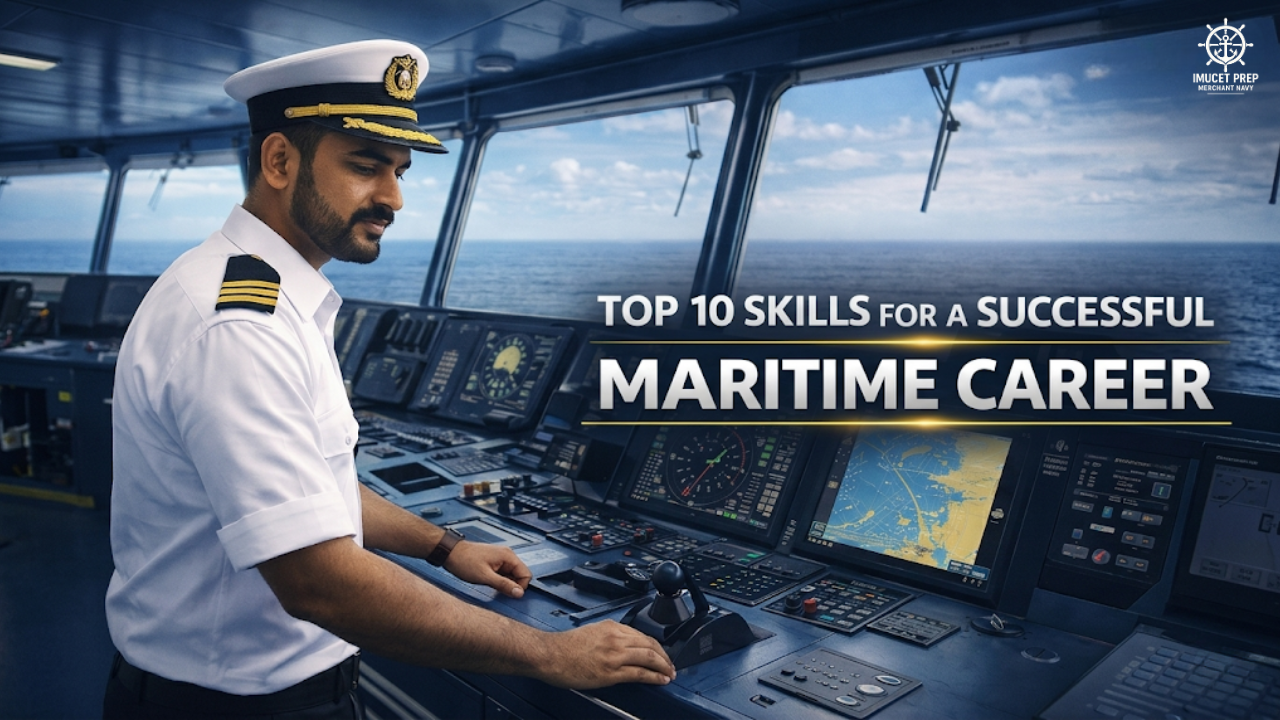
Top 10 Skills for a Successful Maritime Career
As we step into a new era of global shipping, observing the strategic industry shifts leading up to March 31, 2026, modern maritime strategies demand that future seafarers possess a dynamic, multi-faceted skill set to survive and thrive at sea. If you are wondering what it takes to succeed in this demanding field, the answer is simple: the Top 10 Skills for a Successful Maritime Career revolve around a perfect blend of technical proficiency, strict STCW safety adherence, digital literacy, and resilient leadership to efficiently manage complex, technology-driven vessel operations.
As the leading IMUCET Prep and best Merchant Navy coaching institute across Dehradun and Haryana, we understand exactly what shipping companies look for in fresh cadets and seasoned officers alike. To build a robust foundation, you cannot just rely on theoretical knowledge; you need practical, real-world competencies.
Below is a quick overview table outlining these essential competencies before we dive deep into each one.
Overview: Essential Maritime Competencies
| Skill Category | Core Competency | Primary Focus |
| Technical | Marine Engineering & Navigation | Engine maintenance, GPS use, electrical systems |
| Safety | STCW Certification & Risk Assessment | Firefighting, lifeboat handling, ISM code |
| Digital | AI Familiarity & Cybersecurity | Operating modern navigation tools, system protection |
| Interpersonal | Leadership & Communication | Crew management, conflict resolution, clear commands |
| Cognitive | Problem Solving & Critical Thinking | Emergency response, decision making under pressure |
| Personal | Physical/Mental Strength & Adaptability | Stamina, isolation management, adaptability in storms |
Why the Top 10 Skills for a Successful Maritime Career Matter Today
The maritime industry has evolved rapidly. Today, commercial shipping and oceanic navigation rely heavily on automation, green fuels, and artificial intelligence. However, human expertise remains the most critical component onboard. Mastering the Top 10 Skills for a Successful Maritime Career ensures that you do not just secure a job, but you build a lifelong, rewarding career.
Shipping companies seek cadets who demonstrate a mastery of maritime navigation skills alongside excellent soft skills. Whether you aim to be a deck officer plotting a course or a marine engineer maintaining complex machinery, mastering these areas gives you a massive competitive edge. Let us explore the exact abilities you need to cultivate.
Unveiling the Top 10 Skills for a Successful Maritime Career
1. Technical Knowledge and Marine Engineering Basics
To excel at sea, you must build a profound understanding of technical operations. Technical expertise forms the absolute bedrock of the Top 10 Skills for a Successful Maritime Career.
For engineering cadets, this means mastering marine engineering basics, including engine maintenance on ships and understanding complex electrical systems. For deck cadets, this translates into advanced maritime navigation skills, flawless chart reading, and expertise in GPS and compass use.
2. STCW Certification Skills and Strict Safety Protocols
The ocean is an unforgiving environment. Therefore, maintaining strict safety and compliance essentials is a non-negotiable aspect of the Top 10 Skills for a Successful Maritime Career. Your STCW certification skills dictate your readiness to handle life-threatening situations through ship safety drills and firefighting.
3. Digital Literacy and Modern AI Familiarity
A critical addition to the Top 10 Skills for a Successful Maritime Career is advanced digital literacy. Modern ships operate as floating data centers. You must possess the ability to operate AI-driven navigation systems, automated cargo trackers, and digitized engine room dashboards (ECDIS and ARPA).
4. Effective Communication on Ships
A ship operates effectively only when its crew communicates flawlessly. You will likely work alongside a multinational crew, meaning clear, standardized English is vital. Effective communication prevents misunderstandings that could lead to catastrophic accidents.
5. Emergency Response at Sea and Crisis Management
When we discuss the Top 10 Skills for a Successful Maritime Career, crisis management stands out as a true test of character. Whether you face an engine room fire or a hull breach, your ability to execute an emergency response defines your competence as a sailor.
6. Physical Fitness and Mental Strength for Sailors
Naturally, physical and mental resilience represents a core pillar of the Top 10 Skills for a Successful Maritime Career. You must handle long voyages, shift work, and the psychological isolation from family for months at a time.
7. Critical Thinking and Problem Solving for Sailors
Out on the open ocean, you are your own first responder. Problem-solving involves diagnosing complex mechanical failures or rerouting a voyage due to sudden weather changes. This analytical mindset is one of the most vital Top 10 Skills for a Successful Maritime Career.
8. Cybersecurity Awareness in Modern Shipping
As ships become more connected, they become more vulnerable. Cybersecurity awareness has rapidly become one of the indispensable Top 10 Skills for a Successful Maritime Career. Protecting the ship’s network from digital threats is now as important as protecting the hull.
9. Leadership for Officers and Crew Management
Mastering leadership and soft skills is an absolute must when evaluating the Top 10 Skills for a Successful Maritime Career. Exceptional leadership involves inspiring your team and demonstrating unwavering adaptability in storms.
10. Continuous Training and Adaptability in Storms
The final entry in our Top 10 Skills for a Successful Maritime Career focuses on your commitment to lifelong learning. To achieve career growth, you must embrace continuous training in new maritime technologies and safety codes.
Mastering the Top Skills Needed for a Successful Career
Building these competencies requires expert guidance. As the premier IMUCET Prep destination in Dehradun and Haryana, our coaching programs focus explicitly on instilling the Top 10 Skills for a Successful Maritime Career into every student. We bridge the gap between textbook theory and oceanic reality.
Conclusion
A lucrative, adventurous career in the Merchant Navy awaits those who are willing to put in the hard work. By focusing deeply on the Top 10 Skills for a Successful Maritime Career, you prepare yourself for the unique challenges of the sea.
Start your journey today, invest in continuous maritime training, and let our top-tier coaching guide you toward a highly successful and deeply rewarding career on the high seas.
FAQs
1. What are the most important skills needed for a successful maritime career?
The most important skills for a maritime career include leadership, navigation knowledge, technical expertise, communication, teamwork, problem-solving, discipline, physical fitness, adaptability, and safety awareness.
2. Why is communication skill important in the maritime industry?
Effective communication is essential on ships for coordination between crew members, officers, and port authorities to ensure smooth operations and safety at sea.
3. How important is leadership in the merchant navy?
Leadership is one of the key skills in the merchant navy, as officers and captains must guide the crew, make quick decisions, and handle emergencies responsibly.
4. Do maritime professionals need technical knowledge?
Yes, technical knowledge is crucial for operating navigation systems, engines, machinery, and modern maritime technology used on ships.
5. Why is teamwork important for a maritime career?
Life at sea requires close coordination among crew members, making teamwork essential for efficient ship operations and emergency handling.
6. Is physical fitness necessary for a maritime job?
Yes, physical fitness is important because maritime professionals often work in demanding environments and need stamina for long shifts and emergency situations.
7. How does problem-solving help in maritime careers?
Problem-solving skills help seafarers respond quickly to technical issues, weather challenges, and onboard emergencies.
8. Why is adaptability an important maritime skill?
The maritime industry involves changing weather conditions, international routes, and dynamic work environments, so adaptability is highly valued.
9. What role does safety awareness play in maritime professions?
Safety awareness helps prevent accidents, ensures compliance with maritime regulations, and protects both crew and cargo.
10. Can these skills help in getting selected for IMU CET and merchant navy training?
Yes, these skills are highly valued during maritime training and can improve your chances of success in IMU CET preparation and future merchant navy careers.