
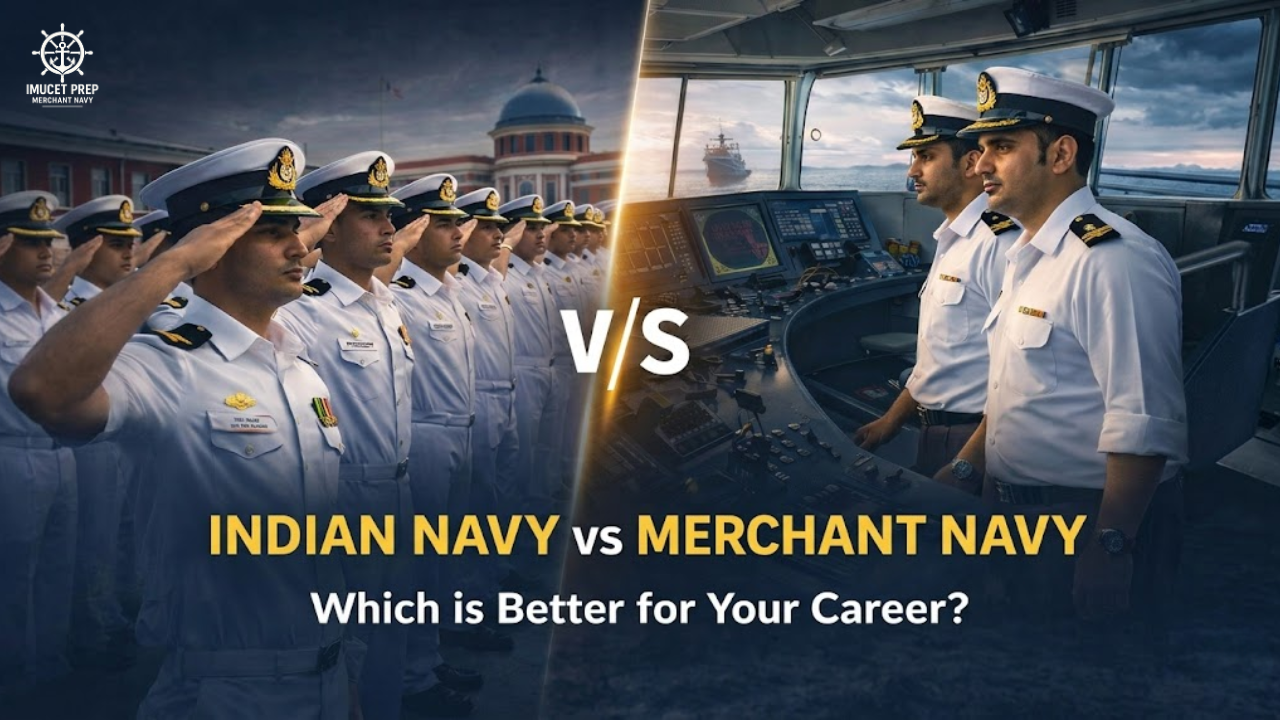
Indian Navy V/S Merchant Navy: Which is Better for Your Career?
Welcome to the most comprehensive and ultimate guide for young maritime aspirants! If you are reading this, you are likely standing at one of the most crucial crossroads of your life, gazing out at the ocean and wondering which path will lead you to a successful, fulfilling career. Every single day, students walk into our center completely torn between two distinct and massive maritime paths: serving at sea for the government or sailing the globe for commercial giants. When it comes to the great Indian Navy V/S Merchant Navy debate, making the right choice early on is absolutely critical.
It is a very common misconception among the general public that the Indian Navy and the Merchant Navy are exactly the same thing. Because both professions involve wearing crisp, pristine white uniforms, working on giant ships, and navigating the deep blue sea, people outside the maritime industry often blur the lines. Let us clear the air right now: they are completely different worlds with entirely different goals, lifestyles, and financial rewards.
Understanding the Core Debate: Indian Navy V/S Merchant Navy
At their very foundation, these two massive entities serve completely different purposes on the global stage. To understand which career suits your personality and your life goals, you first need to understand why these organizations exist in the first place. The Indian Navy V/S Merchant Navy choice ultimately comes down to your personal values: patriotism versus commerce.
The Indian Navy: The Shield of the Nation
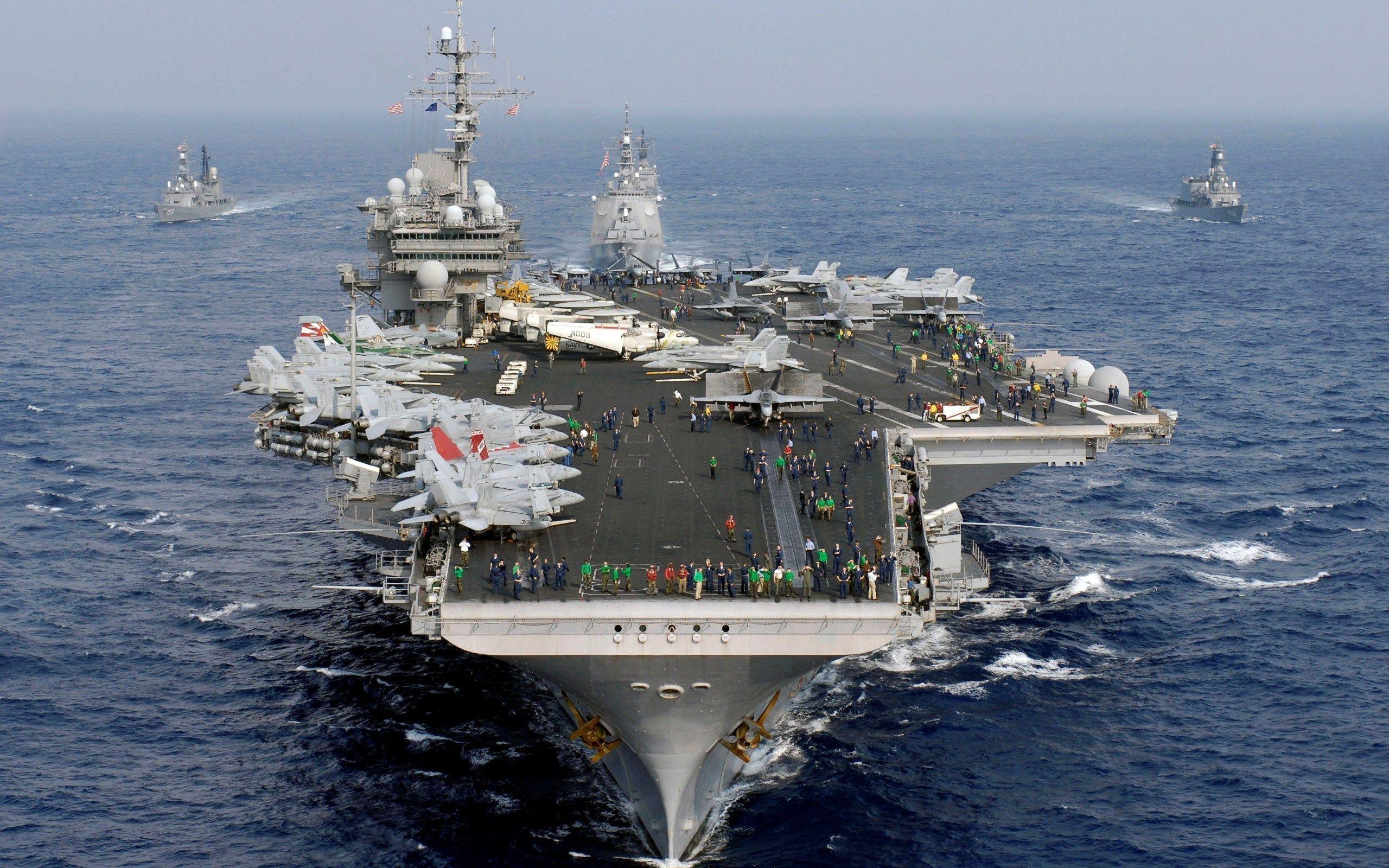
The Indian Navy is the elite, highly respected maritime branch of the Indian Armed Forces. Its primary philosophy is defense, deterrence, national security, and force projection. The men and women who join this force are trained for combat, strategic defense, and humanitarian rescue missions under extreme duress. They patrol the highly sensitive maritime borders of India, conduct complex military exercises with allied nations, and remain on high alert to neutralize any external threats.
When you join the Indian Navy, your fundamental goal is not to amass personal wealth; it is to serve the motherland, protect its citizens, and uphold the sovereignty of the nation. You are a warrior first and a mariner second. Your vessels are designed for stealth, speed, and lethality.
The Merchant Navy: The Engine of Global Trade
The Merchant Navy, on the other hand, is a massive, multi-billion-dollar commercial industry. It is the absolute backbone of the global economy. Over 90% of the world’s trade—from the fuel in your car to the smartphone in your hand—is carried out by the international shipping industry.
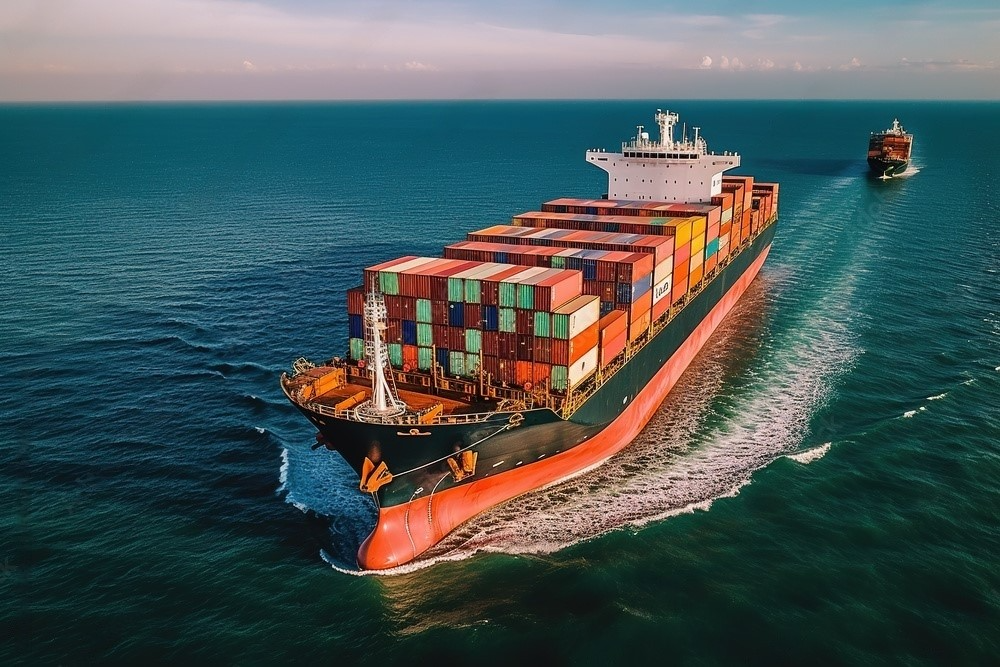
The Merchant Navy consists of a massive fleet of commercial vessels, including colossal crude oil tankers, massive container ships, bulk carriers, roll-on/roll-off car carriers, and luxury cruise liners. The core philosophy here is economics and profit. You are transporting goods from one country to another efficiently, safely, and on time. When you join the Merchant Navy, you become an essential corporate professional navigating the globe to keep international supply chains moving seamlessly.
Indian Navy V/S Merchant Navy: Examining the Organizational Structure
Let’s simplify the biggest structural difference between the two careers, which ultimately dictates how your career will progress, how you will be paid, and what your retirement will look like.
The Government Sector Reality (Indian Navy)
Because the Indian Navy is strictly a government entity operating directly under the Ministry of Defence, every single aspect of your career is highly regulated, structured, and incredibly secure. You are a commissioned officer of the Government of India. This means your job security is absolute. Come recessions, global pandemics, or economic downturns, your job remains safe. You receive a fixed monthly salary, lifetime medical benefits for you and your dependents, access to exclusive military canteens, and most importantly, a lifelong pension after retirement. However, because it is government-run, promotions follow a very strict, time-bound hierarchy.
The Private Sector Reality (Merchant Navy)
The Merchant Navy is driven entirely by private multinational corporations. You will be employed by global shipping management companies like Maersk, Anglo-Eastern, MSC, Fleet Management, or Synergy. Because it is a private sector job, it operates heavily on a contract basis. You sign a contract for a specific voyage (usually lasting between 4 to 9 months depending on your rank and the type of ship).
Once your contract is over and you sign off the ship, you stop receiving a salary until you sign your next contract. However, because it is a private global industry, the salaries are incredibly high. If you perform well, show leadership, and clear your modular competency exams, your promotions can be exceptionally fast.
Day-to-Day Life and Work Environment
To truly understand what your future holds in the Indian Navy V/S Merchant Navy comparison, let’s look at the day-to-day realities of living on these vessels.
Life in the Indian Navy
Naval life is highly disciplined, structured, and heavily unpredictable. Your day begins early with physical training and rigorous drills. The environment is strictly militaristic—seniors are treated with absolute protocol, and orders are followed without question or hesitation. You will be sailing on stealth frigates, nuclear-powered submarines, or massive aircraft carriers.
The living quarters can be cramped, as naval ships are built specifically for weapons, sensors, and stealth, not for the luxury of the crew. Furthermore, your deployment schedule is dictated entirely by national security. Your phone might ring at 2 AM for an emergency deployment, and you might not be able to tell your family where you are going due to operational secrecy.
Life in the Merchant Navy
Life on a commercial vessel is highly professional but can be quite solitary. Modern cargo ships are massive engineering marvels—sometimes the length of four football fields—yet they are operated by a surprisingly small crew of just 20 to 25 people. Everyone has a specific, critical job, either in the blazing hot Engine Room or up on the Navigational Deck.
You work in shifts (called watches), usually 4 hours on and 8 hours off, navigating the ship or monitoring the engines. The living conditions are generally very comfortable; officers get spacious individual cabins with attached washrooms, and the ships feature gyms, recreational rooms with gaming consoles, and sometimes even swimming pools. However, the isolation is profoundly real. You are surrounded by endless ocean for weeks at a time, moving cargo from a port in Brazil to a port in China, dealing with multinational crews and incredibly harsh weather conditions.
Table 1: Daily Lifestyle & Living Conditions
| Feature | Merchant Navy Life | Indian Navy Life |
| Living Quarters | Spacious individual cabins with personal amenities. | Often shared, utilitarian bunks optimized for space and combat readiness. |
| Daily Routine | Structured watchkeeping (e.g., 4 hours on, 8 off), maintenance, and cargo operations. | Rigorous physical training, combat drills, weapon maintenance, and watchkeeping. |
| Crew Size | Small and tight-knit (20-25 personnel). | Large and diverse (anywhere from 50 to 300+ depending on the vessel). |
| Vessel Focus | Cargo capacity, fuel efficiency, and safe transit. | Stealth, speed, weaponry, and radar evasion. |
| Communication | Satellite internet available (though sometimes slow), regular contact with family. | Highly restricted during deployments for operational security. |
Comprehensive Salary, Perks, and Financial Growth Comparison
Money is a major deciding factor for most candidates looking into the Indian Navy V/S Merchant Navy debate. Here is a direct, detailed breakdown of how the financial growth compares between the two paths.
Table 2: Financial Growth & Perks
| Feature / Aspect | Merchant Navy Officer | Indian Navy Officer |
| Starting Salary (Junior Rank) | ₹1.5 Lakhs – ₹2 Lakhs / month | ₹70,000 – ₹80,000 / month |
| Peak Earnings (Captain/Chief) | ₹8 Lakhs – ₹12 Lakhs / month | ₹2 Lakhs – ₹2.5 Lakhs / month |
| Taxation | Mostly Tax-Free (NRE Status if NRI rules met) | Fully Taxable under Indian Income Tax slabs |
| Contract Type | Short-term contracts (4 to 9 months) | Permanent Commission (Lifetime Job) |
| Career Progression Speed | Fast-paced: 10 to 12 years to reach Captain | Slower: 20 to 25 years based on military tenure |
| Retirement & Pension | No pension. You must manage your own investments. | 100% job security with a guaranteed lifetime pension. |
| Family Lifestyle Perks | Long, uninterrupted vacations (3-4 months at a time) | Free medical care, military clubs, highly subsidized housing |
| Travel Opportunities | Extensive global travel to international commercial ports | Travel is mostly limited to naval bases and joint exercise locations |
Understanding the Massive Tax-Free Benefit:
One of the biggest draws of the commercial side in the Indian Navy V/S Merchant Navy spectrum is the NRI (Non-Resident Indian) status. If a Merchant Navy professional spends more than 182 days outside the Indian territorial waters in a single financial year, their entire income earned on the ship becomes 100% tax-free in India. This massive financial leverage allows young officers to accumulate wealth rapidly, buy real estate, invest heavily, and secure their family’s financial future by their late 20s or early 30s.
Career Progression and Ranks in Indian Navy V/S Merchant Navy
Merchant Navy Hierarchy:
The commercial fleet is strictly divided into two main operational departments: Deck and Engine.
- Deck Department: You start as a Deck Cadet, learning the ropes of celestial navigation, electronic chart plotting, and cargo handling. After clearing modular exams, you become a 3rd Officer, then a 2nd Officer (handling voyage planning), then a Chief Officer (handling cargo operations and crew management), and finally, the Master (Captain) of the ship, taking ultimate responsibility for the vessel and its multi-million dollar cargo.
- Engine Department: You start as an Engine Cadet or Junior Engineer, maintaining massive propulsion systems that are often the size of a five-story building. You progress to 4th Engineer, 3rd Engineer, 2nd Engineer, and ultimately the Chief Engineer, who is the absolute authority on all technical and mechanical operations aboard.
Indian Navy Hierarchy:
The defense forces have a standardized, globally recognized commissioned officer rank structure. You begin your journey as a Sub-Lieutenant after grueling years at the naval academy. Based on years of dedicated service, specialized warfare training, and performance reports, you slowly promote to Lieutenant, Lieutenant Commander, Commander, Captain, Commodore, Rear Admiral, Vice Admiral, and finally, Admiral (Chief of the Naval Staff).
Deep Dive into Eligibility, Syllabus, and Entrance Exams
Whether you choose the path of defense or the path of commerce, you cannot simply walk onto a ship. You must clear highly competitive entrance exams. Let’s break down the entry requirements for both sides of the Indian Navy V/S Merchant Navy divide.
1.Joining the Merchant Navy (The Commercial Route)
To enter the highly lucrative commercial sector, you must clear the Indian Maritime University Common Entrance Test (IMUCET) and pass the incredibly stringent DG Shipping medical examinations.
- Educational Requirements: You must have passed your 12th standard with Physics, Chemistry, and Mathematics (PCM). A minimum aggregate of 60% in PCM is required, along with at least 50% marks in English in either your 10th or 12th board exams.
- Age Limits: The age bracket is generally between 17 and 25 years.
- Medical Fitness & Eyesight: The Directorate General of Shipping is notoriously strict about eyesight. For Deck Cadets, your vision must be a perfect 6/6 in both eyes without the aid of glasses. Engine Cadets are allowed minor relaxations (up to +/- 2.5). However, color blindness is strictly prohibited for all ranks, as you must be able to read navigational lights at night.
- The IMUCET Syllabus: This computer-based exam lasts for 3 hours and consists of 200 multiple-choice questions. It thoroughly tests 11th and 12th standard Physics, Chemistry, and Mathematics, along with English Grammar and General Aptitude. The major advantage here is that there is no negative marking, encouraging you to attempt all questions with confidence.
At IMUCET Prep in Haryana, we specialize entirely in helping students master this specific syllabus. We know exactly what topics carry the most weight and how to optimize your speed for the online test.
2.Joining the Indian Navy (The Defense Route)
To wear the prestigious white uniform of the defense forces, the gateway is usually the National Defence Academy (NDA) exam conducted by UPSC, or the highly competitive 10+2 B.Tech Cadet Entry Scheme.
- Educational Requirements: You must have passed 12th standard with PCM. If you are applying for the B.Tech entry specifically, you need a minimum of 70% in PCM and a highly competitive JEE Main All India Rank.
- Age Limits: The defense forces require you to catch them young. The window is incredibly tight: you must be between 16.5 and 19.5 years of age.
- Medical Fitness: Absolute physical perfection is demanded. You will be thoroughly checked for everything from the exact curvature of your spine to flat feet, knock-knees, and sweaty palms. Tattoos are highly restricted and only permitted on specific inner parts of the forearm.
- The NDA Syllabus: The written exam is brutal. It features severe negative marking and is divided into a massive Mathematics paper (testing advanced calculus, trigonometry, and algebra) and a General Ability Test (GAT) which covers advanced English, Physics, Chemistry, History, Geography, and Current Affairs.
The True Scale of Competition & Selection Process
Whenever a student at our Haryana branch asks which path is statistically easier to secure, we always lay out the raw, unfiltered data regarding the Indian Navy V/S Merchant Navy selection rates.
The Defense Selection Funnel (NDA/SSB):
The Indian Navy is one of the most elite organizations on earth. Every single year, nearly 800,000 ambitious students appear for the NDA written exam. Out of those, only about 10,000 manage to clear the rigorous written cutoff. These students are then called for the legendary 5-Day SSB (Services Selection Board) Interview.
This is not a normal interview; it is a grueling psychological and physical marathon that tests your “Officer Like Qualities” through group tasks, intense psychology tests, and high-pressure personal interviews. Out of 10,000, only about 500 clear the SSB. After extreme military medicals, only about 400 make the final merit list. That is a selection rate of roughly 0.05%. You have to be exceptional to make it.
The Commercial Selection Funnel (Sponsorships):
The commercial maritime industry is also highly competitive, but the sheer scale of opportunity is entirely different. Because there are over 50,000 commercial ships operating globally, the international demand for well-trained officers is consistently high.
However, to secure a successful, scam-free career, you need to clear the IMUCET and obtain a highly coveted “Sponsorship” letter from a reputed global shipping company before joining a maritime college. At IMUCET Prep, we understand exactly how these multinational companies conduct their psychometric tests and personal interviews. We train our students rigorously to secure these vital sponsorships early on. While it requires immense dedication, a hardworking student has a highly realistic and achievable chance of securing a lucrative career in the merchant sector.
Advantages and Disadvantages
Let us weigh the pros and cons of the Indian Navy V/S Merchant Navy objectively to give you a clear perspective.
Advantages of the Merchant Navy:
- Exceptional Wealth: The ability to earn ₹10 Lakhs a month tax-free in your early 30s allows you to build incredible financial assets, buy prime properties, and secure your family’s future with astonishing speed.
- Global Exploration: You genuinely get paid to travel the world. You will see the bustling ports of Singapore, traverse the historic canals of Panama, and witness the stunning coastlines of Europe.
- Unmatched Vacations: Because you work on contracts, you can choose to work for 6 months and take 4 months completely off. During your vacation, no commanding officer will call you, and you are entirely free to spend quality, uninterrupted time with your family.
Disadvantages of the Merchant Navy:
- Intense Homesickness: Being away from your family, missing vital birthdays, anniversaries, and festivals for 6-9 months at a time takes a very heavy emotional toll on your mental health.
- Contractual Instability: You only earn when you are actively sailing. If you take a year off due to a medical issue or family emergency, your income drops to zero.
- Isolation: Living in a floating steel box with a small crew and limited internet connectivity can be mentally exhausting.
Advantages of the Indian Navy:
- Supreme Honor: There is absolutely no price tag on the immense societal respect you command when you walk into a room wearing the naval uniform adorned with service medals.
- Ultimate Security: Come rain, pandemic, or global recession, your government job is 100% secure, and your lifelong pension is a constitutional guarantee.
- Family Lifestyle: Your family gets to live in highly secure, beautifully maintained, and pollution-free naval bases equipped with top-tier schools, golf courses, sailing clubs, and free elite medical facilities.
Disadvantages of the Indian Navy:
- Lower Financial Ceiling: Compared directly to commercial shipping, the salary is significantly lower, and every rupee is fully taxable.
- Unpredictable Life: You do not have the luxury of planning long holidays. National security comes first, meaning frequent, sudden, and unpredictable deployments.
- Physical Danger: You are, first and foremost, an active soldier. During times of war, escalating border tensions, or hostile rescue missions, your life is genuinely on the line.
How IMUCET Prep in Haryana Can Help You Achieve Your Dreams
Preparing for either of these demanding fields is a monumental task, and you absolutely cannot do it alone by simply reading textbooks in your room. The competition is fierce, and the standards are unforgiving. You need targeted, strategic, and expert-led preparation.
If you are leaning toward the commercial side—aiming for those high-paying global shipping jobs—you need to crack the online exams, master advanced English communication for multinational crews, and pass strict psychological profiling tests. With the expert guidance of IMUCET Prep, located right here in Haryana, you will practice extensively with past year papers, undergo intense mock interviews with industry veterans, and prepare your mind for the exact psychometric profiling that top-tier shipping companies demand.
As the leading institution for maritime coaching in Haryana, IMUCET Prep provides unparalleled, highly researched study materials, dedicated and experienced faculty, and an environment that fosters strict discipline and ultimate success. We understand the value of hard-earned money, which is why we ensure our fee structures are highly affordable. We believe that every passionate student in Haryana, regardless of their financial background, deserves the absolute best IMUCET Prep to achieve their dream of conquering the global oceans.
Conclusion: Making Your Ultimate Choice
At the end of the day, the grand debate between the Indian Navy V/S Merchant Navy boils down to your personal philosophy of life, your financial goals, and your risk appetite.
Do you want to dedicate your youth to serving the nation, earning unparalleled respect, and living a highly disciplined, secure military life with a guaranteed pension? If your heart beats for the tricolor, the Indian Navy is your true calling.
Or, do you want to achieve immense financial independence at a young age, experience the raw thrill of international trade, travel the globe, and enjoy long blocks of completely free time with your family? If that is the case, the Merchant Navy is the undisputed winner.
Whichever path you choose, it demands relentless hard work, an incredibly strong grasp of Physics and Mathematics, and the mental resilience to clear incredibly tough entrance exams. Do not leave your maritime career to chance or guesswork. Secure your future and reach out to IMUCET Prep in Haryana today to kickstart your glorious journey toward the sea
Frequently Asked Questions (FAQs)
1.What is the fundamental difference in the Indian Navy V/S Merchant Navy debate?
The Indian Navy is the elite military branch of the government responsible for maritime border defense, warfare, and national security. The Merchant Navy is a massive private commercial sector responsible for transporting cargo, oil, and passengers across the globe strictly for corporate profit.
2.Which profession offers a higher salary?
The commercial sector pays substantially more. A Master (Captain) in the commercial fleet can earn between ₹8 Lakhs to ₹12 Lakhs per month (which is often entirely tax-free), while an Indian Navy Captain earns roughly ₹2 Lakhs to ₹2.5 Lakhs (which is fully taxable).
3.What are the age limits for joining?
To join the defense forces right after 12th (via the NDA route), you must be between 16.5 and 19.5 years old. To join the commercial fleet via IMUCET, the age limit is generally much more relaxed, usually accepting candidates between 17 and 25 years of age.
4.Are girls allowed to join both fields?
Yes, absolutely! Both fields actively encourage and vigorously recruit female candidates. The defense forces have recently opened up more combat and permanent commission roles for women, and the commercial sector features many highly successful, trailblazing female captains and chief engineers sailing globally.
5.Which exam is statistically easier to crack?
The commercial maritime exams (IMUCET) are significantly more accessible because the global demand for officers is massive. The NDA exam for the defense forces is extremely difficult, boasting a heavily restricted selection rate of around 0.05% due to strict military standards.
6.How does family life differ in both professions?
In the defense sector, your family can live with you in safe, well-equipped, and scenic naval bases. In the commercial sector, you sail alone for months at a time, but you are compensated with long, uninterrupted 3-to-4-month vacations at home where you are completely off-duty.
7.Is the Merchant Navy a government job?
No, it is not. It is a 100% private sector industry. You will be working for private international shipping management companies on a contractual basis.
8.Can I switch from commercial ships to the defense forces later?
It is extremely rare and highly difficult. Because of the strict age cutoffs and fundamentally different combat training protocols required by the military, lateral entry from commercial shipping to the defense sector is not a standard or easy career move.
9.Are tattoos allowed?
The commercial sector is generally lenient with tattoos, provided they are not overtly offensive or extremist. The defense forces, however, have incredibly strict rules; tattoos are usually only allowed on the inner face of the forearms and nowhere else on the body.
10.Where can I find the absolute best maritime coaching to prepare for these exams?
If you are determined to conquer your entrance exams and secure top-tier sponsorships, look no further. IMUCET Prep is the premier destination in Haryana for affordable, highly experienced, and completely result-oriented maritime guidance.