DNS vs B.Sc Nautical Science: Best Merchant Navy Course?
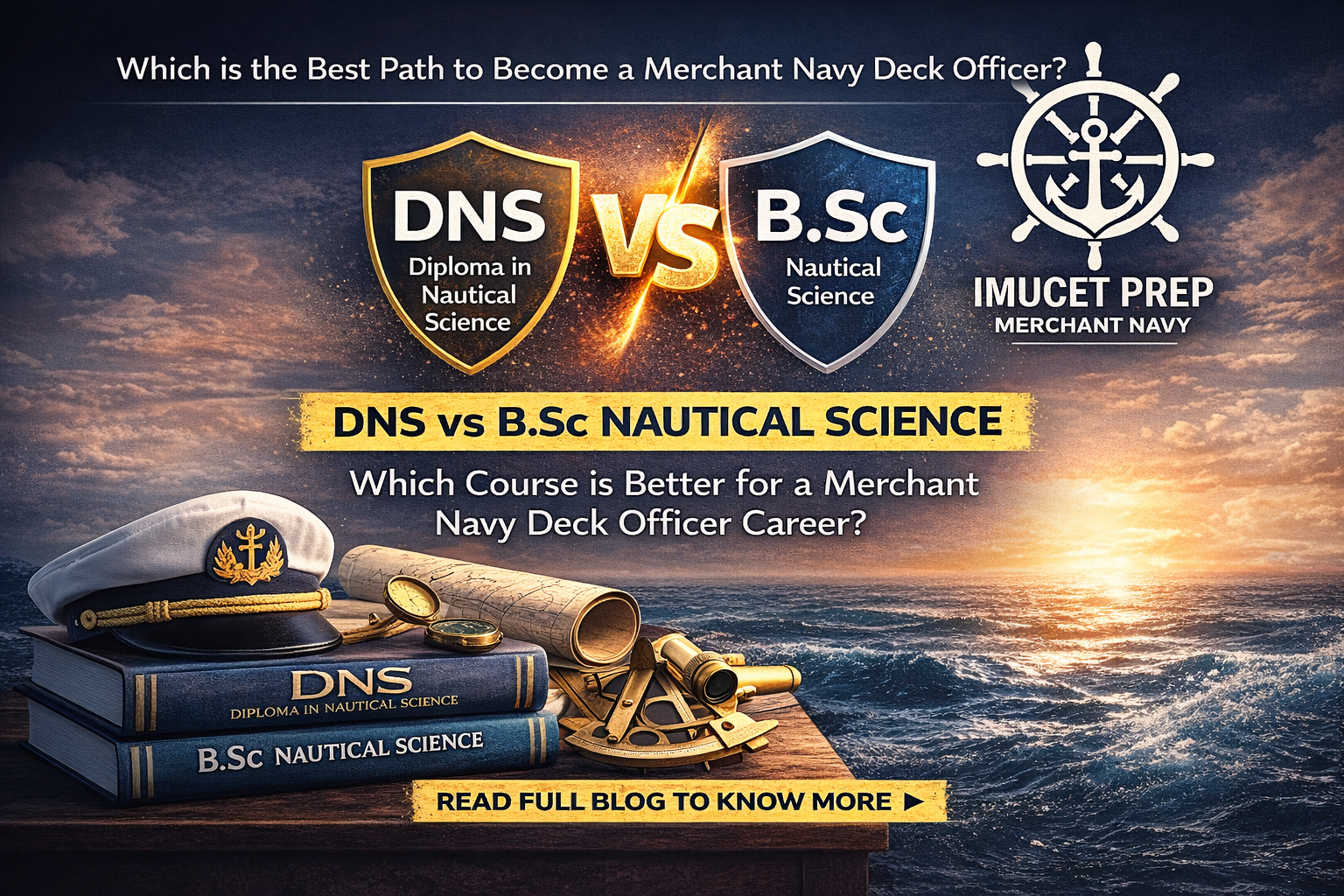
Choosing the right Merchant Navy course after Class 12 is a crucial step for students aiming to build a successful career at sea. Among the most popular options, DNS (Diploma in Nautical Science) and B.Sc Nautical Science often create confusion.
Both courses are offered by DG Shipping approved institutes and lead to officer-level positions in the Merchant Navy. In this blog, we will explain the difference between DNS and B.Sc Nautical Science, eligibility, career scope, salary, and help you decide which course suits your goals best.
What Is DNS (Diploma in Nautical Science)?
DNS (Diploma in Nautical Science) is a 1-year residential diploma course designed for students who want a fast-track entry into the Merchant Navy. The course focuses on navigation, seamanship, and ship operations, followed by mandatory sea training.
DNS is ideal for students who are clear about pursuing a sailing career and want to start earning early.
Key Features of DNS Course
- Course Duration: 1 Year
- Faster entry into sea service
- Practical, ship-oriented training
- Early career growth
- Requires company sponsorship
Must be pursued from DG Shipping approved institutes
What Is B.Sc Nautical Science?
B.Sc Nautical Science is a 3-year undergraduate degree programme that provides comprehensive theoretical and practical knowledge of maritime navigation, cargo handling, and ship management.
This course is suitable for students who prefer a degree-based education along with a Merchant Navy career, and may want flexibility for future shore-based roles.
Key Features of B.Sc Nautical Science
- Course Duration: 3 Years
- Bachelor’s degree qualification
- Strong academic foundation
- Balanced classroom and practical training
- Offered by universities and maritime colleges
DNS vs B.Sc Nautical Science: Course Comparison
| Feature | DNS | B.Sc Nautical Science |
| Duration | 1 Year | 3 Years |
| Qualification | Diploma | Degree |
| Sea Entry | Faster | Slower |
| Academic Depth | Moderate | High |
| Sponsorship | Mandatory | Not always mandatory |
| Ideal For | Quick career starters | Degree-focused students |
Eligibility Criteria for Both Courses
To join DNS or B.Sc Nautical Science, candidates must:
- Pass 10+2 with Physics, Chemistry & Mathematics (PCM)
- Score minimum 50–60% marks (varies by institute)
- Be aged between 17–25 years
- Qualify IMUCET
- Clear DG Shipping medical fitness
👉 Students planning for IMU CET 2026 exam date should start preparation early, as competition increases every year.
Career Path After DNS & B.Sc Nautical Science
Both courses lead to the same officer hierarchy in the Merchant Navy. The difference lies mainly in how fast you enter sea service, not the final destination.
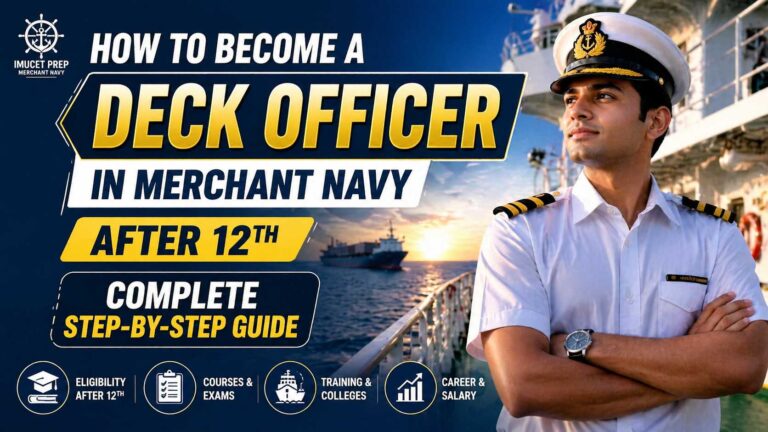
Deck Cadet Promotion Path
After joining as a Deck Cadet, candidates progress through the following ranks:
- Deck Cadet
- Third Officer
- Second Officer
- Chief Officer
- Captain (Master Mariner)
This Deck Cadet Promotion path is based on sea time, competency exams, and performance, not on whether you chose DNS or B.Sc. Nautical Science.
Salary & Career Scope in Merchant Navy
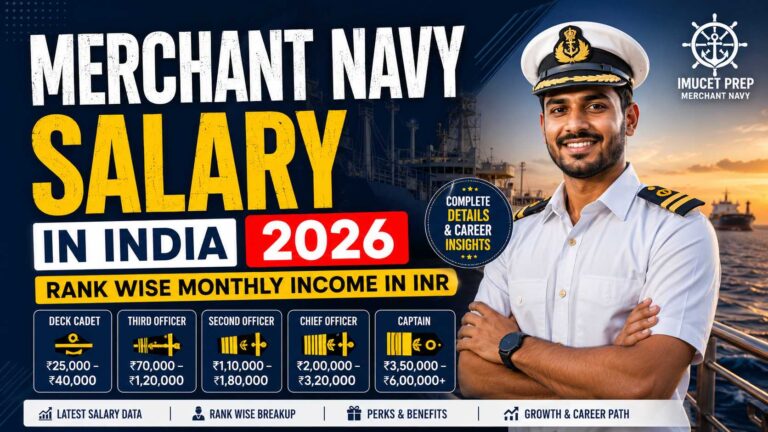
A career in the Merchant Navy offers financial independence at a young age, with salaries far higher than most shore-based professions.
- Deck Cadet Stipend (Training Phase): ₹40,000 – ₹80,000 per month (varies by company).
- Junior Officer (Starting Salary): Upon becoming a Third Officer, the salary jumps to ₹1.5 Lakh – ₹3 Lakh per month.
- Senior Officer / Captain: With experience, salaries range from ₹7 Lakh to ₹15 Lakh+ per month (depending on the type of ship and company).
- Tax-Free Income: The entire income is 100% Tax-Free for Indian seafarers who sail for more than 182 days in a financial year.
Shore-Based Opportunities: Life at sea isn’t the only option. Experienced officers can easily shift to high-paying shore jobs such as Marine Surveying, Port Operations, Ship Management, or Maritime Education & Training.
DNS or B.Sc. Nautical Science: Which One Should You Choose?
Choose DNS if:
- You want a shorter course
- You prefer early sea exposure
- You are focused on sailing careers only
Choose B.Sc Nautical Science if:
- You want a recognized degree
- You prefer academic learning
- You want future flexibility beyond sailing
Both courses are excellent — the right choice depends on your career timeline and learning preference.
Importance of IMUCET Coaching
Cracking IMUCET is mandatory for entry into top maritime institutes. Professional coaching helps with:
- PCM concept clarity
- Mock tests & exam strategy
- Medical & physical guidance
- Sponsorship and career counselling
Early preparation for IMU CET 2026 exam date significantly improves success chances.
Conclusion
Choosing between DNS and B.Sc Nautical Science is an important career decision, but with the right guidance, the journey becomes much clearer. Both courses offer excellent opportunities in the Merchant Navy when pursued with proper preparation and training.
IMUCET Prep provides expert coaching for IMUCET, DNS, and B.Sc Nautical Science, helping students secure admission in DG Shipping approved institutes and confidently progress on the Merchant Navy career path.
👉 Ready to start your journey? Contact IMUCET Prep today for a free counselling session in Dehradun or Haryana, and take the first step toward a successful maritime career.
Frequently Asked Questions (FAQs)
Q1: Is DNS better than B.Sc Nautical Science?
There is no “better” course; it depends on your goals. If you want to start earning early and prefer practical learning, DNS is the right choice. If you want a full graduation degree, a structured campus life, and more flexibility for future higher studies (like an MBA), B.Sc Nautical Science is better.
Q2: Which course offers better job security: DNS or B.Sc Nautical Science?
DNS is generally considered “safer” initially because admission is impossible without a Sponsorship Letter (a pre-signed job offer) from a shipping company. This means you have a job in hand before you pay your fees. In B.Sc Nautical Science, you join the college first and compete for campus placements during the 3-year course.
Q3: Can I do the DNS course without sponsorship?
No, you cannot. As per DG Shipping regulations, valid sponsorship from a shipping company is mandatory to secure admission into a DNS course. However, for B.Sc Nautical Science, you can take admission in a college first and get placed (sponsored) later during the 3-year course.
Q4: Which course helps me become a Captain faster?
DNS gets you on a ship 2 years earlier than B.Sc Nautical Science, giving you a head start in sea experience. However, B.Sc students often find it slightly easier to clear written competency exams later because of their strong 3-year academic foundation. In the long run, both reach the rank of Captain at a similar age.
Q5: Is IMUCET mandatory for both DNS and B.Sc Nautical Science?
Yes, clearing the IMU CET (Indian Maritime University Common Entrance Test) is compulsory for admission to both DNS and B.Sc Nautical Science courses in any DG Shipping-approved institute in India.